Cappella Artemisia     Programs     Discography     Reviews     Concerts     Support     Gallery     About Us     Contact     


See our YouTube links


Dear friends and supporters of Cappella Artemisia

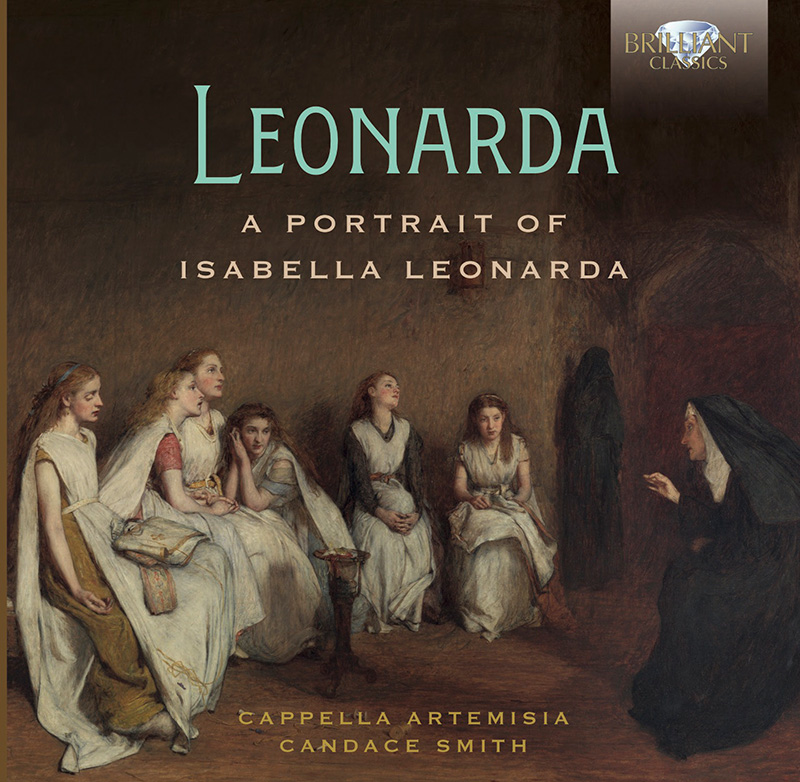
We are delighted to announce the release of our new recording: Scintillate amicæ stellæ - Christmas in the Convents of 16th- and 17th-Century Italy, paid for in part by our Kickstarter fundraising project. This anthology of works written by and for Italian cloistered nuns calls for a great variety of forces ranging from solo voices to double choirs of both singers and instruments, and involves no fewer than 18 musicians. We can’t imagine a better way to celebrate Christmas than with this glorious music.

Thanks to all our generous donors who helped make this CD possible. Our next recording project will be a program of music for Holy Week planned for 2012. Contributions to the realization of this upcoming CD are welcome! Please visit our Support page to make a donation.

For more updates on the concert and recording activities of Cappella Artemisia, please visit our Facebook page.

Thanks again to everyone who helped make this project a reality. Happy Holidays!

Candace Smith


Cappella Artemisia is an ensemble of voices and instruments which attempts to provide some answers to an intriguing mystery. Throughout the late 16th and 17th centuries, the chronicles of historians and travelers in Italy provide images of a fabulous musical world inhabited by women--singers, players and even composers. This world was entirely contained within the walls of the convents, and these women were cloistered nuns. Such images are all the more intriguing, considering the truly draconian restrictions governing virtually every aspect of these women’s lives, especially their music. But here is the mystery: the music written for and by the cloistered nuns of 16th- and 17th-century Italy often included parts for tenor and bass voices. Yet most instruments (as well as male voices, of course) were forbidden in the convents. How was this music performed?

In collaboration with Artemisia Editions and other leading scholars specializing in this fascinating aspect of music history, Cappella Artemisia experiments with various solutions to the problem of performing this music as it would have originally been heard, in "a world without men": the use of "forbidden" instruments whose presence is well documented despite offical church vetos; unusual transpositions, instructions for which are to be found in treatises interestingly enough dedicated to nuns; using women’s voices to cover unusually wide ranges (we know the names of the nuns of Ferrara who sang tenor and bass!); and others. Cappella Artemisia takes a resourceful approach to this repertoire, certainly in keeping with the spirit of inventiveness that the nuns themselves needed to adopt in order to bring music into their lives (many were the nuns who played trombone!).

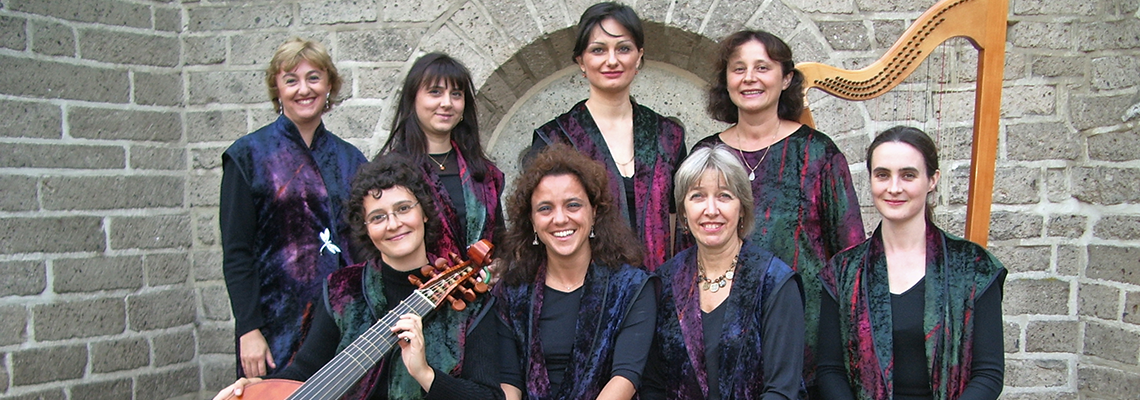
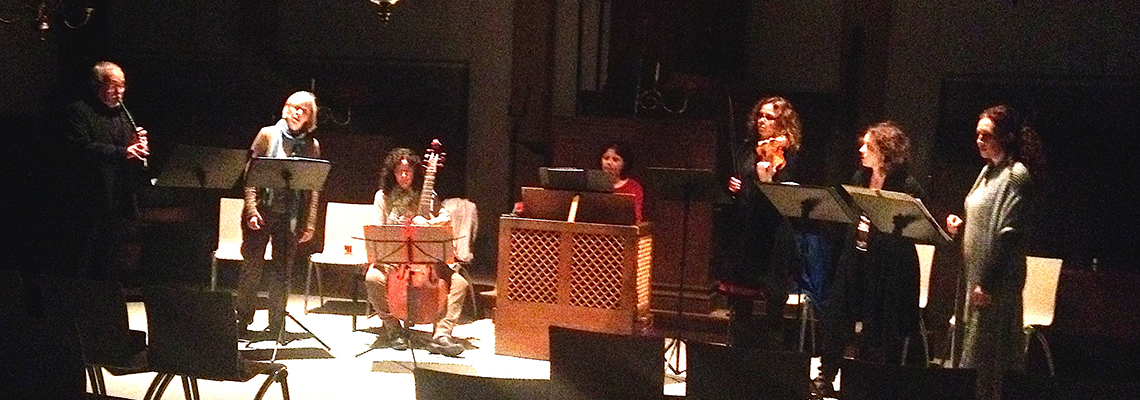
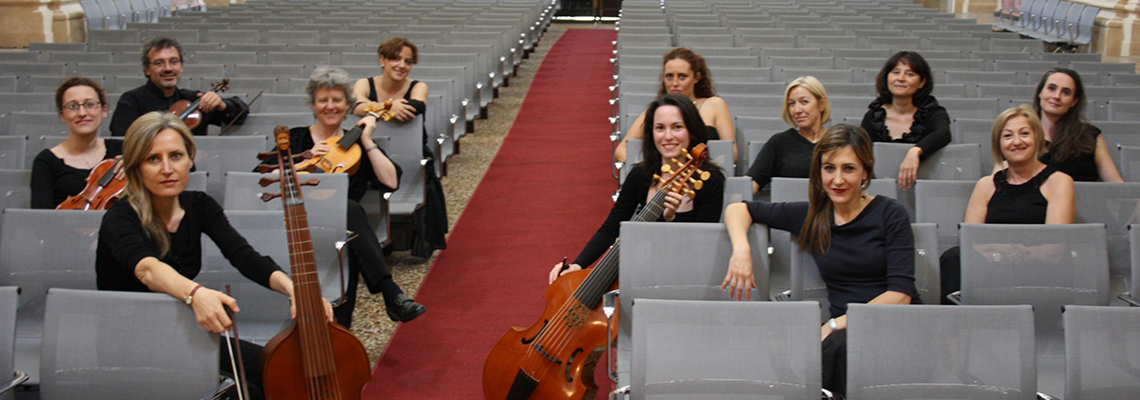
Cappella Artemisia, founded in 1991, is an all-women’s vocal ensemble based in Bologna, Italy, and consists of a core of 6-10 singers with continuo. Since its inception the ensemble has received critical and popular praise, both for the rarity and originality of its repertoire, and for the high quality of its performances. It has appeared in concert at such prestigious venues as the Festival of Flanders (Bruges and Alden-Biesen), The Holland Festival of Early Music (Utrecht), Il Festival Monteverdiano di Cremona, the Osterfestival Innsbruck, the WDR Festival der Alten Musik in Herne, the Tage Alter Musik in Regensburg, Women and Music (Chard, UK), Donne in Musica and I Concerti al Quirinale (Rome), Les Fêtes Musicales de Savoie (France), and numerous other important festivals of early music throughout Europe and North America. Its concerts have been broadcast by the radios of Italy, France, Belgium, Austria, Germany, Switzerland, Croatia and the United States. In addition to their traditional repertoire of music from Italian convents, the singers of the ensemble have also been involved in a modern staging of Purcell’s Dido and Aeneas in an all-women’s performance recalling that of 1689 at a fashionable boarding school in Chelsea for “Young Gentlewomen”.

Cappella Artemisia takes its name from the painter, Artemisia Gentileschi, a striking figure in 17th-century Italy whose artistic accomplishments are only now beginning to be recognized. We hope, under her auspices, to bring this same recognition to the neglected musical achievements of her forgotten contemporaries within the convent walls.

For the latest news on concerts and appearances, please visit us on Facebook.